

It’s a Wonderful Life
A Play adapted by Doug Rand from the screenplay by Frances Goodrich, Albert Hackett, Frank Capra, and Jo Swerling
Jackson Theatre Guild, 2021
I leapt at the opportunity to direct this one for a few reasons. First and foremost, I love directing. Next, I would be directing for a proscenium theatre after having directed for three-quarter or in-the-round productions for over a decade. It’s a beautiful theatre, too: the Ned in downtown Jackson, TN.
This would also be a return to a large company of actors. I’d grown accustomed to casts of six playing multiple roles whenever necessary, so to have a large cast once again felt like a perfectly timed challenge. Again, I struck absolute gold with my cast. From George to Young Harry, I had a cast for the ages.
I had the pleasure of playing Harry Bailey a decade earlier at the Barter Theatre and George Bailey a whopping twenty years earlier for the Jackson Theatre Guild, so I was familiar with the story and this particular script.
My goal with this production was to create a flow to the evening that kept the story humming just ahead of the audience. There aren’t many surprises for an audience in the story of It’s a Wonderful Life. People come from all over to see their favorite, familiar moments onstage. Therefore, timing is key to surprising the audience and helping them experience the story in a new way.
The vignettes dovetailed from one to the other, entrances were tight, and transitions kept the ball rolling. In fact, after one preview performance, I added a blackout just to give the audience a chance to applaud. We tried it the next night and kept it for the run.
The Tragedy of Julius Caesar
By William Shakespeare adapted by John Hardy
Savannah Stage Company, 2021
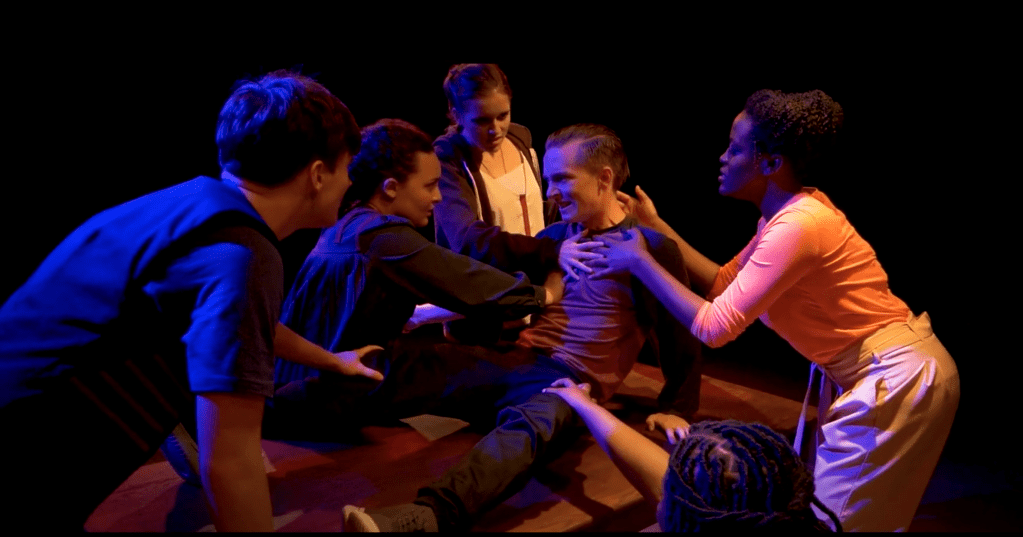
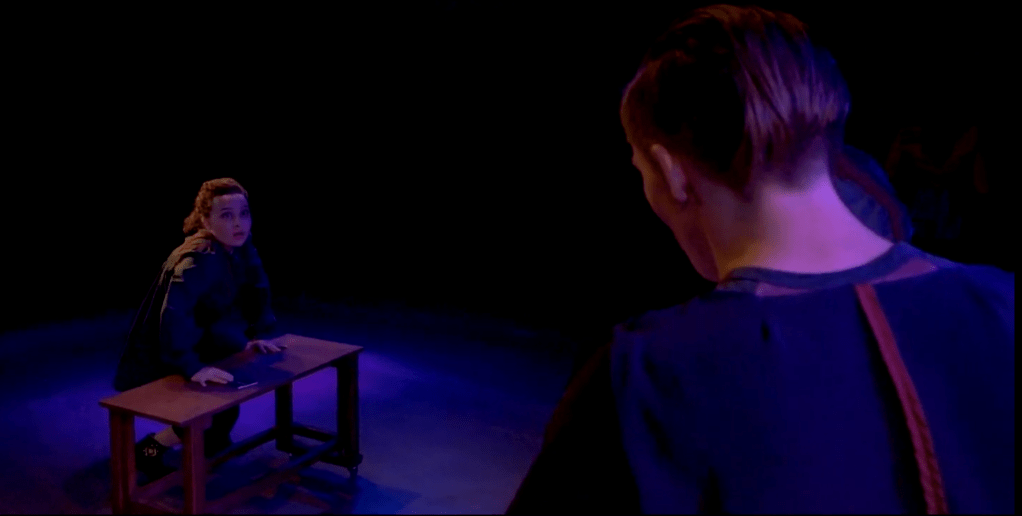
Finally, a return to Shakespeare. SSC used this production to launch a youth acting company. If there’s anything better than young actors taking ownership over heightened language and following impulses onstage, please tell me. Using the template put in place for Alice in Wonderland the previous year, we again filmed this production to be distributed to schools as a virtual field trip.
Virtual rehearsals included two cameras feeding into the Zoom link: one for my face and one for an overview of a model of the stage with color-coded icons representing the different actors. I moved the icons in real time as we rehearsed. By the time we were cleared to rehearse in the same space, the cast had learned their staging.
This production taught me once again that there is absolutely no limit to how prepared a director can be. Filming day was pure magic for the cast, the crew, and for me. Once again my editor, John Arnold, came through, executing my ideas and making them even better than I could have imagined.
More promotional material available here.
Alice in Wonderland
By Lewis Carroll, adapted by Alexis Ambrose
Savannah Stage Company, 2020
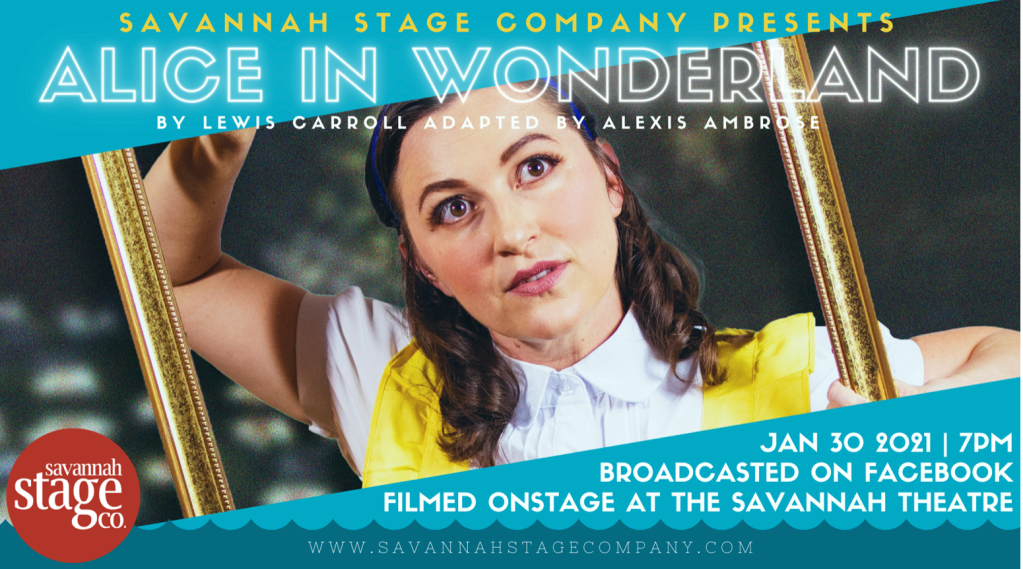
In unprecedented times, the theatre does what it does best: adapts. This play came to me as a surprise. I was not scheduled to direct it; however, when I was asked I took it as a challenge in imagination. Alice in Wonderland has been a tough sell to me in the past, but this was a chance to fall in love with this story. That’s precisely what happened.
Given the state of the world in 2020 and, more specifically, live theatre, this production was filmed and promoted as a virtual field trip.
Mixing theatre and film is sticky business, but I’m proud of my cast and what we accomplished. This experience taught me how integral the film editor must be to the creative process. I couldn’t be luckier than to have John Arnold onboard to film and edit for us.
Link for viewing available here.
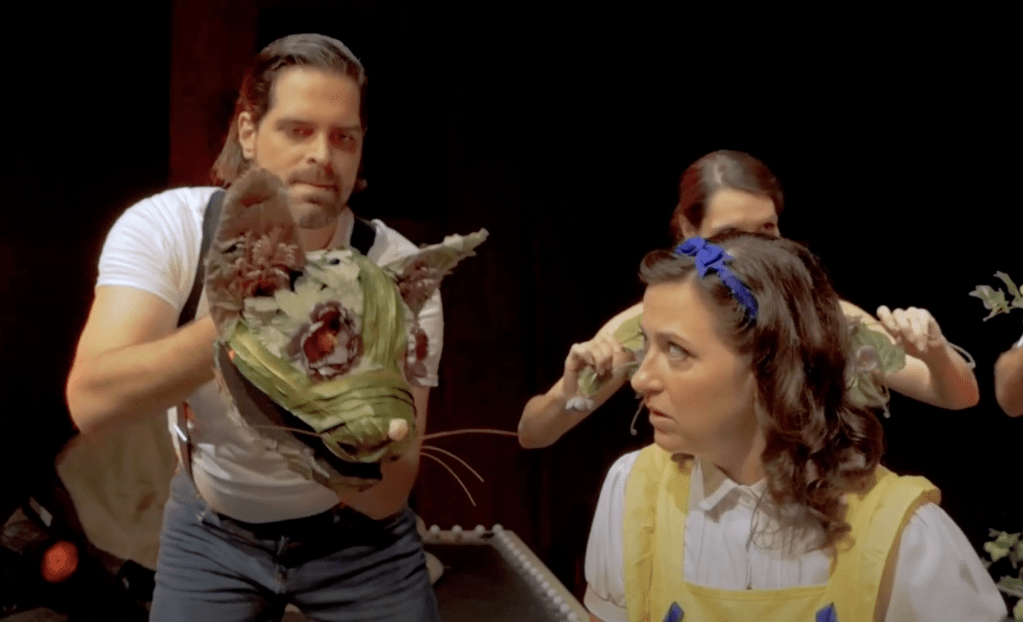
BILLY, GOAT, GRUFF: THE MUSICAL
Book and Lyrics by Gwen Edwards, Music by Ben Mackel
Savannah Stage Company, 2019
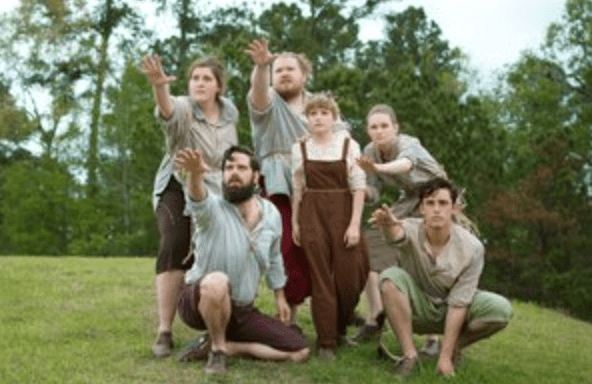
There are a handful of shows you’ll encounter multiple times in a career. I had the good fortune to experience this play twice: the first was the premier at the Barter Theatre as an actor, the second was ten years later as director.
This musical takes a classic story and gives it a context that’s rich in love and infused with action. The melodies soar and stick with you. I think “Pasture of Paradise” is modern hymn, and the troll song is a villain song that Scar or Ursula would be overjoyed to sing.
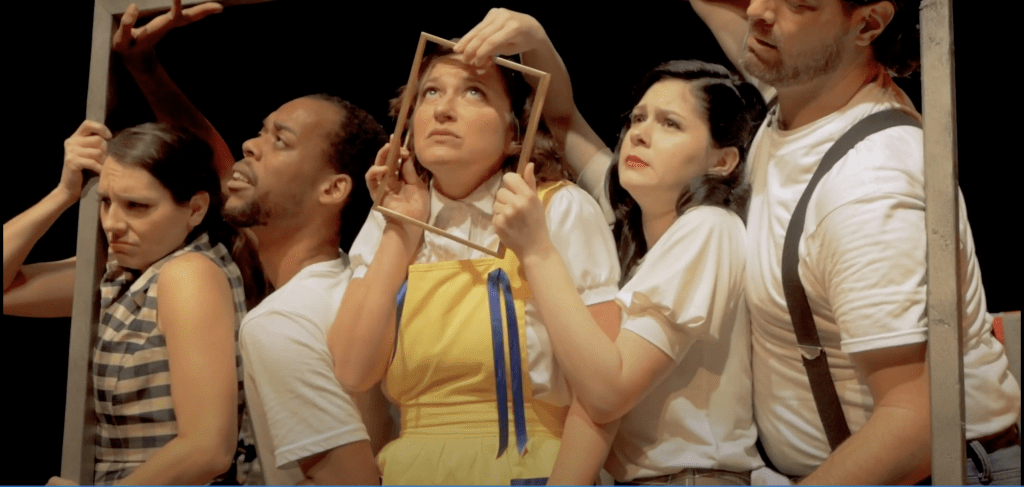
Our production proved a musical can be small in scale, but pack all the might of a large-scale musical. A cast of six and a set made up of a cube, two poles, and a rope were all we needed to create a mountain side, a bridge, a cliff, and a pasture fit for a goat family.
The Scarlet Letter
By Catherine Bush adapted from the book by Nathaniel Hawthorne
Savannah Stage Company, 2016
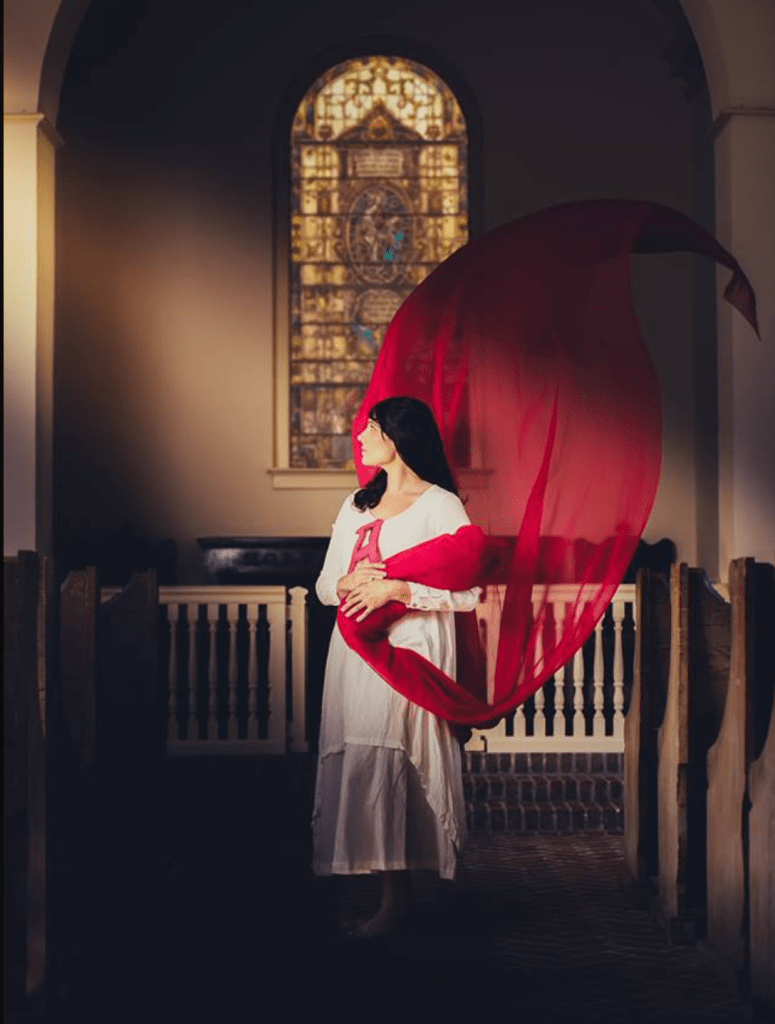
This production taught me about investing in a cast. We had a short rehearsal period (when don’t we?) and heightened language to tackle. This cast made miracles an everyday occurrence.
I experimented with using staging to convey character arcs. It sounds rudimentary to say now, but for my artistic journey this was big stuff. I staged characters who were adhering to the Puritanical Boston lifestyle to move in straight lines and right angles. Characters who had chosen freedom moved with more freedom. Pearl had free rein as you might imagine.
I had a phenomenal help in Alexis Ambrose in creating a movement vocabulary for Hester and Dimmesdale. They needed physical outbursts of emotion that pulled the characters out of their restrictive society and into their bodies. The movement exploded and gave the play its engine.
More promotional photos here.
A Midsummer Night’s Dream
Adapted by Carrie Smith Lewis from the play by William Shakespeare
Savannah Stage Company, 2015
This production came my way by a titan of theatre and professionalism, Jayme Tinti, the Artistic Director of Savannah Stage Company. She and I had worked together in repertory at the Barter Theatre and shared our dreams for theatre, the work we loved, and the work we wanted to create. When she asked me if I was interested in spending a summer in Savannah working on Shakespeare to be performed in the upstairs room of a bar and in a park, I jumped at the chance.
This was my first hand at directing Shakespeare, and I was hooked. I had an incredible cast who gave me room to experiment and grow through the process. The cast was six actors strong, all of whom pulled double, triple, and in one instance quadruple duty.
I also tried my hand at building some costume pieces, in particular the headpieces the fairy folk wore. Check out the gallery here.

Miss Nelson is Missing
Book, Music, and Lyrics by Joan Cushing
Barter Players, Barter Theatre, 2013
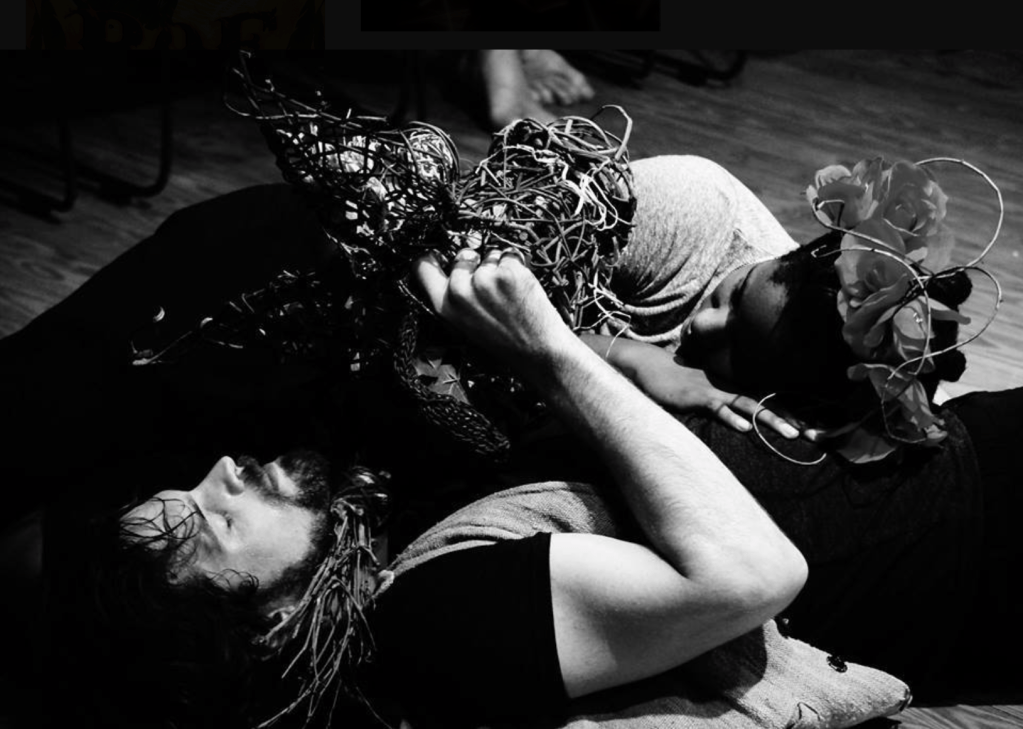
After focusing on acting for a while, a call came in from one of my directing/acting/life mentors asking me if I’d direct for the Barter Players. This production marked my professional directorial debut, so I’ll always have a soft spot for the Swamp. The cast was smaller (six total), and the designers were all incredible pros. I learned heaps about communication with designers, clarity, and having to live with creative decisions for better or worse. In plays intended for younger audiences, there are new locations every few pages, sometimes every few lines. Having a set that is easily modified with lighting or how the cast physically relates to it is paramount to smooth transitions. I say this after asking the shop to build four desks that wound up weighing nearly 50 pounds each – they might as well have weighed two tons each. Apologies issued to the cast and lessons learned.
Articles about Miss Nelson is Missing from The Roanoke Times and Times News.
Annie Get Your Gun (Stone)
Music and Lyrics by Irving Berlin and Book by Herbert and Dorothy Fields as Revised by Peter Stone
Campus Lights, Murray State University, 2005
This was my collegiate directorial debut. I adore this musical. It has it’s problems to solve, but the score is nearly perfect and the laughs keep coming. I proposed the show for its large cast size and opportunity for cross-major casting. I believe an accounting major was our Dolly. I started playing with transitions to convey story when I added my women’s ensemble to the key change in “I Got Lost in His Arms.” We moved seamlessly from the ship to the ballroom scene without a blackout. To this day I think about how our choreographer created a step show event in the middle of “I Got the Sun in the Morning and the Moon at Night” when the country folk invade the city ballroom…
How to Succeed in Business Without Really Trying
Music and Lyrics by Frank Loesser, Book by Abe Burrows, Jack Weinstock, & Willie Gilbert
Campus Lights, Murray State University, 2006
After Annie Get Your Gun, I wanted to tackle a show with which I had little to no experience at the time, so I proposed this gem to the board. It was a hit with the cast, and the orchestra wailed on this score. I had the best cast anyone could have wanted, and the audiences fell in love with them every performance. My favorite segment in this one was staging the entrances of the Paris Originals.
 David McCall